Why the Same Eighth Costs $15 More Down the Street (And What You Can Do About It)
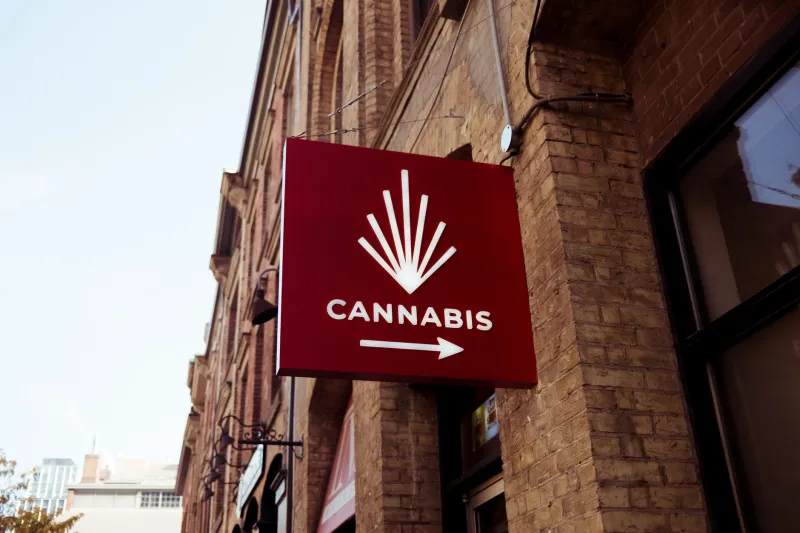
You did everything right. You checked the menu on Leafly, spotted your go-to strain at a shop across town, and thought you'd save a few bucks. Then you got to the register and discovered it was somehow more expensive there than at your usual spot. Same product. Same packaging. Same lab numbers on the label. Different price by a country mile.
This isn't a fluke — it's the reality of legal cannabis retail in America, where pricing can swing $10, $15, or even $25 for the exact same product depending on which door you walk through. So what's actually going on here? Buckle up, because the answer involves everything from real estate to ego.
The Overhead Problem Nobody Talks About
Let's start with the most boring — and most honest — explanation: running a dispensary is expensive as hell.
A shop in downtown Denver, West Hollywood, or Chicago's River North is paying rent that would make your jaw drop. We're talking anywhere from $8,000 to $30,000 a month for premium retail square footage in competitive legal markets. That cost gets baked into every product on the shelf. A dispensary operating out of a strip mall in the suburbs? Their overhead is a fraction of that, and they can afford to price more aggressively.
Staffing adds another layer. Some shops run lean with a small crew and basic service. Others invest heavily in trained, knowledgeable budtenders — people who actually know their terpenes from their cannabinoids — and that expertise has a price tag attached. So does the fancy point-of-sale system, the security team, the compliance officer making sure every gram is tracked correctly, and the accountant navigating the nightmare that is cannabis taxation under IRC 280E.
None of that is the consumer's fault. But it is the consumer's problem.
Supply Chain Isn't as Simple as You Think
Here's something a lot of shoppers assume: if two dispensaries carry the same brand, they're getting it at the same wholesale price. That's often not true.
Larger dispensary chains — especially multi-state operators (MSOs) — have serious purchasing power. They can negotiate volume discounts with cultivators and distributors, locking in lower per-unit costs that smaller independent shops simply can't access. That savings can get passed on to customers, or it can pad the margin. Depends on the business model.
Smaller indie shops, on the other hand, might be ordering smaller quantities more frequently, which typically means higher per-unit costs. They may also be sourcing from smaller local farms that charge a premium for craft-level production — and honestly, sometimes that premium is worth it. But it does mean the sticker price climbs.
Then there's the distributor situation. In many states, dispensaries can't buy directly from cultivators — they have to go through a licensed distributor. Different distributors charge different margins. Some brands have exclusive distribution deals that limit which shops can even carry them, and exclusivity tends to come with a price bump.
Brand Positioning: The Dispensary Is Selling a Vibe
This one is a little harder to quantify, but it's real: some dispensaries are just trying to be the expensive option — and doing it on purpose.
Think about how retail works outside of cannabis. A watch that tells time perfectly costs $20 at Target. That same basic function costs $500 at a boutique jewelry store because the environment, the branding, and the perceived prestige are part of what you're buying. Cannabis is no different.
Some shops invest heavily in interior design, curated product selections, and a luxury retail experience. They're targeting a customer who wants to feel like they're buying something elevated. The prices reflect that positioning, not necessarily any meaningful difference in the product itself. You're paying for the vibe, the aesthetic, and the story the brand tells about itself.
There's nothing inherently wrong with that model — but consumers deserve to know when they're paying a premium for ambiance rather than quality.
Taxes, Fees, and the State Gets Its Cut
Depending on where you live, cannabis taxes can be genuinely punishing. California stacks a 15% excise tax on top of local sales taxes that can push the effective tax rate past 30% in some cities. Illinois consumers are paying some of the highest cannabis taxes in the country, with rates that vary by THC potency.
Here's the kicker: dispensaries in different parts of the same state can be subject to different local tax rates. A shop in one municipality might face a 5% local cannabis tax while one in the next town over collects 10%. That difference shows up in the final price, and if you're not paying attention to which city you're shopping in, it can look like the dispensary is ripping you off when they're actually just operating in a higher-tax jurisdiction.
Some shops absorb a portion of the tax burden to stay competitive. Most don't.
Loyalty Programs and the Long Game
Here's where it gets interesting for strategic shoppers: the sticker price isn't always the real price.
A lot of dispensaries — especially larger ones — run loyalty programs that can meaningfully change what you're actually paying over time. Points-based systems, birthday discounts, first-time customer deals, and referral bonuses can add up to real savings if you're a regular. A shop that charges $55 for an eighth but gives you 10% back in points might actually be cheaper in the long run than the spot across town selling the same product for $48 with no rewards structure.
Flash sales and daily specials are another tool worth tracking. Many shops run significant discounts on specific days — sometimes 20-30% off certain categories. If you're flexible about when you shop, you can often beat the base price at any competitor just by timing your visit right.
How to Actually Shop Smarter
Okay, so what do you do with all this information? A few practical moves:
Compare menus, not just prices. Use apps like Leafly, Weedmaps, or your state's official registry to compare prices across multiple shops before you leave the house. Factor in distance and tax differences.
Ask about loyalty programs upfront. Before you buy anywhere new, find out if they have a rewards system. Even a 5% return on purchases adds up over time.
Check the daily deals. Most dispensary websites and apps list specials. Stacking a sale with a loyalty discount is where the real savings live.
Don't ignore the small shops. Independent dispensaries sometimes carry craft products that chains don't, and they occasionally price competitively to build customer loyalty. Worth exploring.
Factor in the full experience. If one shop's staff is genuinely helpful and saves you from buying the wrong product twice, that has monetary value too. Cheap isn't always cheap if you keep walking out with stuff that doesn't work for you.
The cannabis market in America is still relatively young, and pricing norms are still being worked out in real time. Until there's more transparency and standardization, the smartest move is to stay informed, stay flexible, and never assume the first price you see is the best one available.