The Disappearing Act: What's Really Behind Your Dispensary's Impossible Inventory
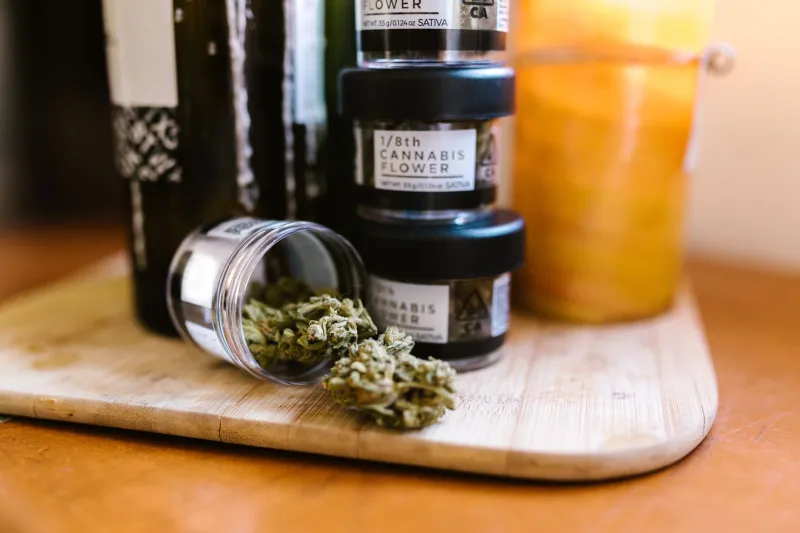
You know the feeling. You're standing at the counter, ready to order the exact thing you've been thinking about all week, and the budtender gives you that look — the apologetic half-smile that means you're about to be disappointed. "We actually just sold out of that one. Not sure when we're getting more."
If that's happened to you more than once at the same shop, you're not unlucky. You're dealing with a structural problem baked into how legal cannabis retail actually works. And the more you understand it, the less frustrating it gets — even if it never fully goes away.
Why "Restocking" Doesn't Mean What You Think It Does
In normal retail, when a product sells out, the store orders more. Simple. Cannabis doesn't work like that.
A dispensary can't just call up a cultivator and place a standing order for 10 pounds of Blue Dream every month. In most states, cannabis purchases must go through licensed distributors or direct cultivator-to-retailer agreements, and those relationships are governed by contracts that don't always allow for flexible reordering. A cultivator might have a harvest cycle that produces that strain once every 12 to 16 weeks. If the dispensary's allotment sold in week three, they're waiting in line with everyone else for the next batch — assuming there is a next batch.
And that's the part most consumers miss: restocking doesn't mean the same product returns. It means something comes back to fill the shelf. Whether it's the same strain, the same cultivator, or even the same product category depends on a dozen variables the dispensary may not fully control.
The Harvest Calendar Problem
Cannabis is an agricultural product with cultivation timelines that don't care about your weekend plans. Indoor grows can produce year-round, but even those operate in cycles — a single room or tent produces a harvest, then that room goes dark for cleaning and replanting while another room comes online. It's a rolling process, and it creates natural gaps.
Outdoor and greenhouse cultivation adds seasonal complexity on top of that. Many craft cultivators in California, Oregon, and other outdoor-friendly states produce one major harvest per year, typically in the fall. That means whatever they grow in October has to last — spread across their retail partners — potentially until the following harvest. When it's gone, it's gone.
A cultivation manager at a mid-sized Oregon operation described it plainly: "We plan our runs as carefully as we can, but we're still farming. A mold issue, a pest problem, a week of unexpected heat — any of that can cut a harvest short. When that happens, our retail partners get less than they expected, and we can't just manufacture more."
State Regulations That Create Artificial Scarcity
Here's a layer most consumers never think about: state purchasing limits on retailers themselves. In some markets, dispensaries face caps on how much they can purchase from a single cultivator within a given period. This was designed to prevent monopolistic relationships and encourage market diversity — noble goals — but in practice it can mean a dispensary can't buy enough of a popular product to keep it consistently in stock even when the cultivator has plenty available.
Transfer limits, excise taxes applied at different supply chain stages, and licensing requirements that restrict which entities can sell to which other entities all add friction to what should be a simple transaction. The bureaucratic layer between a grower with product and a consumer who wants it is genuinely thick in most legal states.
Meanwhile, minimum order requirements from distributors can push smaller dispensaries toward buying broader and shallower — a little bit of a lot of things — rather than deep inventory of the products their customers actually want. The result is shelves that look full but contain nothing you've heard of.
The Contract Trap
Dispensary-cultivator contracts are another invisible force shaping what you see on the menu. Exclusive supply agreements, preferred vendor arrangements, and volume-based pricing structures all influence which cultivators a shop prioritizes. If a dispensary has a favorable contract with Cultivator A, they might phase out Cultivator B's strains even if customers prefer them — because the economics make Cultivator A's product more profitable to sell.
This means a strain can disappear from your local shop not because it's unavailable in the state, but because the business relationship that brought it there ended. You'll never see that explanation on the menu. You'll just see "out of stock" and eventually the slot will be filled by something else.
What You Can Actually Do About It
You can't fix the supply chain, but you can get better at navigating it.
Ask the right questions when you find something you love. Find out which cultivator grew it, not just the strain name. That lets you track the product across multiple dispensaries if your usual shop stops carrying it.
Use dispensary apps and menu platforms actively. Most major dispensary apps allow you to set notifications for specific products. Dutchie, Jane Technologies, and similar platforms that power dispensary menus often have "notify me" functionality that's genuinely useful.
Build a relationship with a budtender you trust. Staff who know your preferences can flag incoming inventory before it hits the menu publicly. Dispensaries often get manifests from distributors a day or two before product arrives. A good budtender will remember you.
Don't anchor too hard to a single strain. Learning to identify what you like about a strain — the terpene profile, the effect type, the potency range — means you can find substitutes more easily when your go-to disappears. Flexibility is the most underrated skill in cannabis shopping.
Ask about upcoming deliveries directly. Some dispensaries will tell you their delivery schedule if you ask. Others won't. But it costs nothing to ask, and occasionally you'll get genuinely useful intel.
The dispensary shelf is not a stable ecosystem. It's a constantly shifting landscape shaped by agriculture, regulation, business contracts, and sometimes just bad luck. The sooner you accept that, the better your shopping experience gets — even when the strain you wanted is already gone.