Ghost Genetics: The Dispensary Trick of Selling You Made-Up Strains at Real Prices
Let's get one thing out of the way: cannabis strain naming has always been a little chaotic. Genetics travel through informal networks, names get duplicated, and the same phenotype can carry five different labels depending on who bred it and who sold it. That's a known problem, and consumers have mostly made peace with it.
What's different — and worth getting genuinely angry about — is something more calculated. Across legal markets, a growing number of retailers are taking a step beyond innocent inconsistency. They're purchasing bulk commodity flower, assigning it a fabricated strain name that sounds compelling, building a fake backstory around it, and selling it at a price point that implies rare, curated genetics. The strain doesn't exist. The name was invented in a marketing meeting. And you paid $65 an eighth for it.
This is worth unpacking.
How the Commodity Flower Market Works
To understand why this happens, you need a quick look at the wholesale side of the cannabis industry. Legal cannabis markets generate enormous volumes of what the industry calls "bulk" or "commodity" flower — product grown at scale, often without a specific strain focus, that doesn't meet the quality thresholds for a cultivator's branded retail line. This flower is real cannabis. It gets people high. But it's undifferentiated, often lower-potency, and doesn't carry the provenance of a named genetics program.
This bulk flower gets sold wholesale at significantly lower prices than branded product. Retailers, distributors, and sometimes intermediary repackagers buy it. And here's where the practice in question begins: some of those buyers don't sell it as bulk. They give it a name.
A memorable name. A name that sounds like it came from a serious breeder — something evocative, something that suggests a lineage. "Glacier Punch." "Cosmic Haze." "Purple Velvet Cake." None of these are necessarily real cultivars with documented genetics. They might be invented wholesale, assigned to whatever was available in the warehouse that week.
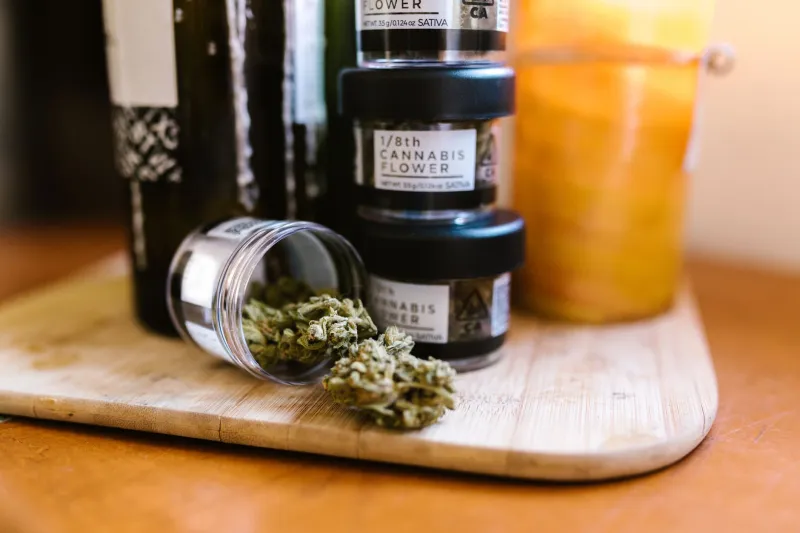
The packaging gets designed. Maybe a terpene profile gets noted on the label — which is technically accurate, since every cannabis flower does have a terpene profile, even if it has nothing to do with the name on the jar. A price point gets set that implies quality. And onto the shelf it goes.
The Legal Grey Area That Makes This Possible
You might be wondering: isn't this fraud? In most consumer product categories, selling a product under a fabricated identity would invite regulatory scrutiny pretty quickly. Cannabis operates in a different environment.
Most state cannabis regulations govern testing, labeling for cannabinoid content, and packaging safety. They don't regulate strain name accuracy. There is no federal cannabis genetics database. There is no licensing body verifying that a cultivar called "Glacier Punch" corresponds to actual, traceable genetics. A dispensary can name flower whatever they want, as long as the THC percentage on the label reflects the actual tested content.
This isn't a loophole that regulators haven't noticed — it's a gap that nobody has yet established authority or political will to close. The result is a legal grey zone wide enough to drive a pallet of mislabeled eighths through.
Some operators are also exploiting the general consumer unfamiliarity with cannabis genetics. Most buyers don't know what a real strain lineage looks like or how to verify one. The average dispensary customer is comparing vibes, price, and THC percentage. A confident-sounding name and attractive packaging can do a lot of work.
Spotting It at the Counter
So how do you know when you're looking at a real cultivar versus a marketing invention? There are signals, and once you know what to look for, they're not subtle.
The name has no search history. Legitimate strains — especially anything worth the price premium — have a paper trail. Seed companies, breeder forums, Leafly entries, grow diaries on Reddit, Instagram posts from cultivators. If you search a strain name and find nothing except the dispensary's own menu listing, be skeptical. Invented names are hard to retroactively populate with history.
No grower is named on the packaging. Reputable cultivars come from identifiable cultivators. If a product's label lists a distributor or a dispensary house brand but no actual grow operation, the genetics claim is harder to verify. Ask who grew it. Ask where it was grown. A budtender who can answer those questions with specifics is a good sign.
The terpene profile doesn't match the claimed lineage. If a product claims to be a specific well-known cross — say, something that should be OG-forward — but the lab report shows a terpene profile with no myrcene and heavy limonene dominance, the genetics story doesn't add up. You don't need to be a botanist to notice when the claimed family tree and the actual chemistry are pointing in different directions.
It's exclusively available at one retailer. House exclusives exist legitimately — a dispensary can partner with a cultivator for a genuine exclusive drop. But a "strain" that's only available at one shop, with no external references, and that rotates suspiciously often should raise questions. Exclusive commodity flower rebranded weekly is a pattern, not a coincidence.
What You Can Actually Demand
You have more leverage at the counter than you probably use. Here's what to ask.
Request the Certificate of Analysis (COA) for the product. This is the third-party lab report. It should list the testing facility, the sample date, the cannabinoid percentages, and ideally a terpene panel. A legitimate retailer provides this without hesitation. Reluctance or vagueness is a red flag.
Ask for the cultivator name and the genetic lineage as the shop understands it. You're not demanding a DNA sequencing result — you're asking if anyone can tell you where this plant came from. "We get it from [Cultivator Name] out of [State]" is a real answer. "It's our house blend" is a tell.
Ask whether the same product appears under a different name at other dispensaries. Some budtenders will be honest with you about this, especially if they've been in the industry long enough to find the whole practice as irritating as consumers do.
And finally: vote with your wallet. Dispensaries that invest in genuine cultivator relationships, that can tell you the actual story behind what's on their shelves, deserve your business more than ones packaging mystery flower in impressive-looking tins. The more consumers push for transparency, the more expensive it becomes for retailers to rely on ghost genetics as a business strategy.
The Bottom Line
Fake strain names are a feature of the legal cannabis market right now, not a bug. Until regulatory frameworks catch up and establish meaningful genetics labeling standards, the responsibility for navigating this falls largely on consumers. That's not fair, but it's reality. Know what questions to ask, know what signals to look for, and don't let a creative name and premium packaging convince you that you're getting something you're not.