Terpenes, Cannabinoids, and the Marketing Machine: What the Entourage Effect Actually Proves

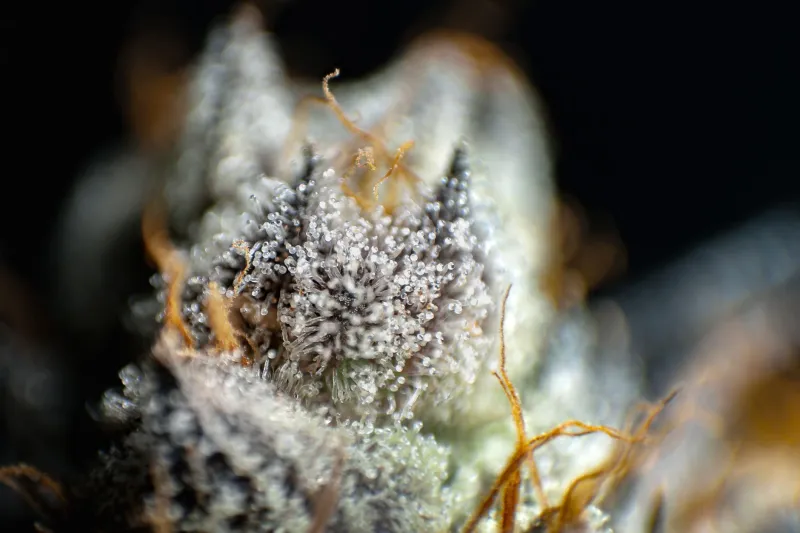
Photo by Photo by Girl with red hat on Unsplash on Unsplash
Walk into any dispensary in America right now and within about four minutes someone will say the phrase "entourage effect." It might be a budtender explaining why a full-spectrum oil costs twice as much as an isolate. It might be stamped on a product label next to a drawing of a terpene molecule that looks vaguely scientific. It might be the reason a pre-roll is priced at $22 instead of $12.
The entourage effect is real. That part isn't in dispute. But the version being sold to you at the counter? That's where things get slippery.
Where the Science Actually Comes From
The term traces back to Israeli researcher Raphael Mechoulam and his colleague Shimon Ben-Shabat, who used it in 1998 to describe how inactive compounds in cannabis seemed to enhance the activity of active ones. Later, neurologist and cannabis researcher Ethan Russo expanded on this in a widely cited 2011 paper, arguing that cannabinoids and terpenes work together in ways that could produce meaningfully different effects than any single compound alone.
That's the foundation. And it's legitimate, peer-reviewed science.
What it does not say is that every product labeled "full-spectrum" is automatically superior, that a terpene profile printed on a jar guarantees a specific experience, or that adding myrcene to a product makes it a sleep aid. None of that is in the research. The actual science is more cautious — it suggests synergy is possible and worth studying, not that any particular combination has been clinically validated for specific outcomes.
How Dispensaries Turned a Theory Into a Sales Tool
Here's where the retail layer gets messy. When the entourage effect became a consumer-facing concept, it gave marketers a science-flavored way to justify premiums, upsells, and product differentiation. Suddenly, "full-spectrum" became a magic phrase. Terpene percentages started appearing on labels as if they were dosing instructions. Strains were marketed as having "synergistic profiles" for anxiety, creativity, or pain relief — claims that have almost no clinical backing at the product level.
A dispensary telling you that a product with "high myrcene and beta-caryophyllene" will help you sleep is making a leap the science doesn't support. Myrcene has shown sedative properties in animal studies. Beta-caryophyllene interacts with CB2 receptors in interesting ways. But the jump from those findings to "this $60 tincture will fix your insomnia" is enormous — and mostly marketing.
The uncomfortable reality is that most dispensaries don't have the data to back these claims. Lab tests show what's present in a product. They don't show how those compounds will interact inside your specific body, with your specific endocannabinoid system, at your specific dose.
What the Research Actually Supports
So what can you reasonably expect from synergy? A few things hold up under scrutiny.
THC and CBD together behave differently than either alone. There's decent evidence that CBD can modulate some of THC's anxiety-inducing effects at certain ratios. This isn't just theory — it's why 1:1 products are genuinely useful for people who find high-THC products overwhelming.
Whole-plant extracts often outperform isolates in user-reported outcomes. This doesn't prove the entourage effect mechanistically, but it's consistent with the idea that something is happening when more compounds are present.
Some terpene-cannabinoid combinations are more interesting than others. Linalool (also found in lavender) combined with CBD has attracted real research attention for anxiety. Limonene shows up in studies related to mood elevation. These are preliminary, but they're not nothing.
What doesn't hold up is the idea that any commercially available product has been precision-engineered for synergy in a way that's meaningfully different from another full-spectrum product. The variation in individual chemistry, growing conditions, and processing methods is too significant for that level of fine-tuning.
How to Actually Shop for Synergy
None of this means you should ignore terpene profiles or dismiss full-spectrum products. It means you should engage with them differently.
Ask for the full COA, not just the highlights. A certificate of analysis from a third-party lab shows you the actual terpene percentages, not just which ones the brand decided to feature on the label. Products with broad, diverse terpene profiles — even at lower percentages — are generally preferable to products that have been stripped down and then had a single terpene added back in.
Be skeptical of effect-specific terpene claims. If a budtender tells you a product is "engineered for focus" because it contains pinene, ask what the source is. If the answer is vibes, that's your answer.
Track your own responses. The most reliable data you have access to is your own experience. A simple notes app log — product, terpene profile, dose, and how you felt — will teach you more in a month than most dispensary recommendations.
Don't pay a premium for the label alone. "Full-spectrum" is a meaningful starting point, but it's not a guarantee of quality or effectiveness. A well-grown, minimally processed product without flashy entourage branding might outperform a premium-priced "synergy formula" every time.
The Bottom Line
The entourage effect is a genuinely interesting piece of cannabis science that the industry has transformed into a marketing superpower. The research says: these compounds interact, and that interaction probably matters. The industry heard: charge more for it.
You don't have to reject the concept to reject the hype. Understanding what the science actually supports — and where the sales pitch begins — is exactly the kind of knowledge that saves you money and helps you find products that actually work for you. Don't let a buzzword on a jar do your thinking for you.