Legal Weed's Dirty Secret: The Underground Market Didn't Disappear, It Just Got More Competitive
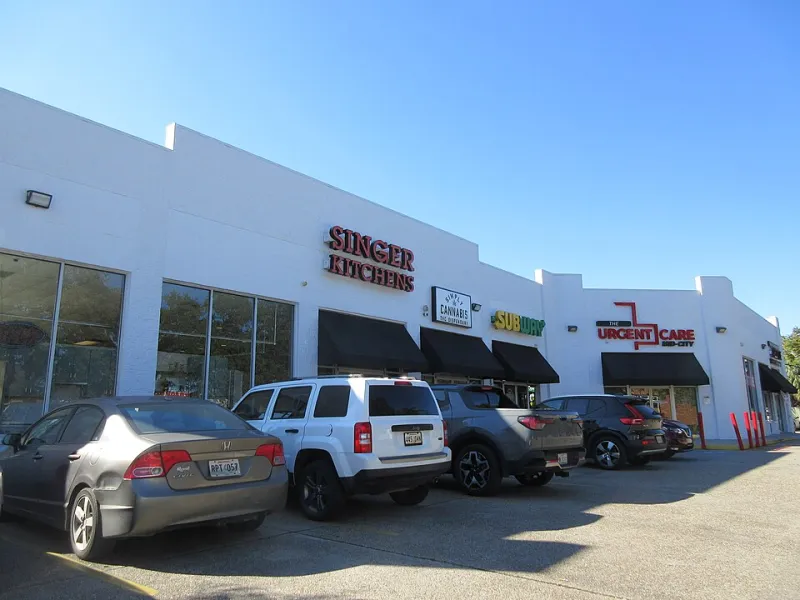
Photo: Infrogmation, CC BY-SA 4.0, via Wikimedia Commons
Legalization was supposed to kill the black market. That was one of the core selling points — regulate it, tax it, bring it into the light, and watch the underground economy wither. California went legal in 2018. Colorado in 2014. Oregon, Washington, Massachusetts — all with years of regulated retail behind them now.
The black market is still here. In some states, it's bigger than the legal market.
That's not a talking point from prohibition advocates. It's a market reality that legal cannabis businesses, state regulators, and honest industry observers have been grappling with for years. And the reasons it's happening are worth understanding — because they say something uncomfortable about how legalization has actually played out in America.
The Price Gap Is Real and It's Enormous
Let's start with the most obvious force: money. In California, legal cannabis is subject to a 15% excise tax, a cultivation tax, state sales tax, and local municipality taxes that can add another 10-15% depending on the city. Stack those up and you're looking at effective tax rates that push 35-45% in some jurisdictions.
That math lands on the consumer. An eighth of mid-tier flower that costs $25-30 on the street in Los Angeles might run $50-60 at a licensed dispensary after taxes. For occasional users, the premium might feel justifiable. For daily consumers on a budget — which is a significant portion of the cannabis-using population — it's not a close call. The illegal market wins on price, often by a lot.
This isn't unique to California. Illinois, with some of the highest cannabis taxes in the country, has watched its illegal market remain stubbornly competitive since recreational sales launched in 2020. New York's slow rollout of licensed dispensaries while illegal shops proliferated openly on city streets became a national story. The pattern repeats.
Access Gaps Aren't Solved by Legalization Alone
Price isn't the only issue. Geographic access is a genuine problem in many legal states, particularly in rural areas where licensed dispensaries are sparse or nonexistent. If the nearest legal shop is 45 minutes away and the guy two streets over has the same product, convenience wins.
This is compounded by local opt-out provisions that many states include in their legalization frameworks — allowing counties and municipalities to ban dispensaries within their borders. In California, more than half of cities and counties have opted out of allowing retail cannabis sales. The result is a patchwork of access that leaves large populations in legal states functionally underserved by the licensed market.
For those consumers, the illegal market isn't a preference. It's proximity.
Does Legal Actually Mean Safer?
The legal market's strongest argument is safety. Licensed products are tested for pesticides, heavy metals, mold, and accurate potency. You know what you're getting. That's the pitch.
And it's a real advantage — up to a point. The 2019 vaping crisis, which killed dozens of people and hospitalized thousands, was driven almost entirely by illegal and gray-market cartridges containing vitamin E acetate. Licensed, tested products weren't the culprit. That's a meaningful distinction.
But the safety argument has limits. Testing standards vary significantly by state. Some state programs have been criticized for labs with conflicts of interest, inconsistent sampling methods, or potency inflation — where products consistently test higher than they actually are because brands and labs both benefit from inflated numbers. "Lab-tested" doesn't automatically mean accurately tested.
And for the millions of Americans buying from long-standing, trusted informal suppliers — people who have purchased from the same source for years without incident — the abstract promise of state testing doesn't feel like a compelling reason to pay 40% more.
The Trap of Vertical Integration and Licensing Costs
There's a structural problem on the supply side that most consumers never see. Getting a cannabis license in most states is expensive, slow, and complicated. Application fees, compliance costs, security requirements, track-and-trace systems, zoning restrictions — the overhead of running a legal operation is substantial. Those costs flow downstream to retail prices.
Small operators, particularly in communities that bore the brunt of the War on Drugs, have struggled to enter the legal market at all. Social equity licensing programs exist in many states but have been poorly implemented in practice — slow, underfunded, and often captured by better-resourced applicants who meet the technical letter of equity requirements without the spirit. The result is a legal market dominated by well-capitalized multi-state operators (MSOs) with the resources to navigate regulatory complexity, while smaller community-based sellers remain outside the system.
When the legal market structurally excludes the people who built the informal market in the first place, it shouldn't be surprising that the informal market continues.
What Would Actually Change the Equation
The states where legal markets have made the most progress against illegal competition share a few characteristics: lower effective tax rates, robust licensing access including delivery, and meaningful enforcement against unlicensed sellers — not just consumers.
Federal rescheduling or descheduling of cannabis would help enormously. The current federal status forces legal cannabis businesses to operate without normal banking access, pay taxes under IRS code 280E (which disallows standard business deductions), and navigate a compliance maze that inflates costs throughout the supply chain. Remove those structural barriers and legal prices come down.
But none of that is imminent. And in the meantime, the legal market is competing against an illegal market that has decades of infrastructure, established customer relationships, and a significant price advantage.
The Honest Conversation
None of this is an argument for buying illegal cannabis. The safety risks are real, and supporting licensed businesses does matter for the long-term health of the legal industry and the communities it employs. But pretending the illegal market is irrational, or that its persistence is purely a law enforcement failure, misses the point.
The legal market made promises — lower prices through regulation, better access through licensing, safer products through testing. It's kept some of those promises, partially, in some places. In others, it hasn't come close.
Until the economics actually work for everyday consumers, the underground market isn't going anywhere. And the legal industry should probably spend less time being surprised by that and more time figuring out how to actually compete.