Speak the Language: A Practical Decoder Ring for Dispensary Jargon
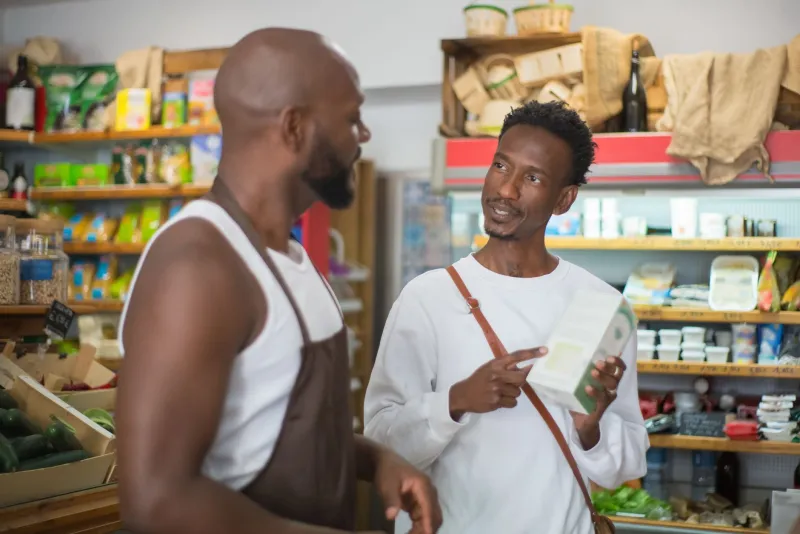
You walk in. The place looks clean, maybe even a little sleek. The menu board is glowing with strain names and percentages and abbreviations that might as well be a tax form. The budtender asks if you want something "full-spectrum" or if you're okay with "isolate," and you say "uh, sure" because you don't want to hold up the line.
We've all been there. Cannabis retail has developed its own dense vocabulary over decades — part stoner slang, part lab science, part marketing speak — and nobody hands you a glossary at the door. So here's yours.
The Basics You Should Already Know (But Nobody Explained)
Let's start at the foundation before getting into the deeper cuts.
Flower just means the smokable bud. Simple enough. But you'll also hear "nug" (a single dense piece of bud), "shake" (the loose bits and small fragments at the bottom of a jar — cheaper, not necessarily worse), and "trim" (the leaf material cut away during processing, usually used for lower-grade products).
Indica, Sativa, and Hybrid — look, you already know these words, but here's what budtenders actually mean when they use them: almost nothing scientifically precise. Modern cannabis genetics are so thoroughly crossbred that these labels are more about expected effect profile than actual plant taxonomy. When a budtender says "this one's more sativa-leaning," they mean it's marketed toward energetic, heady effects. Take it as a rough vibe, not a guarantee.
THC and CBD percentages on the label tell you the concentration of the two most famous cannabinoids. Higher THC doesn't automatically mean a better or stronger experience — but it does mean you should probably start slow if you're newer to the product.
The Words That Actually Matter at the Counter
This is where people start nodding and quietly panicking.
Full-spectrum means the product contains the full range of cannabinoids, terpenes, and other compounds found in the original plant — nothing stripped out. The idea is that all those compounds work together in what's called the entourage effect, potentially producing a more nuanced experience than a product built around just one isolated compound. Think of it like the difference between eating a whole orange and taking a vitamin C tablet.
Broad-spectrum is similar, but with THC removed or reduced to near-zero levels. Common in products sold across state lines or marketed to people who need to pass drug tests.
Isolate is exactly what it sounds like — a single compound, usually CBD or THC, extracted and purified on its own. Cheaper to produce, easier to dose precisely, but missing all those other plant compounds.
Terpenes are the aromatic molecules that give cannabis its smell and flavor — and they do a lot more than that. Myrcene, limonene, caryophyllene, linalool: these aren't just names to sound smart. Terpene profiles genuinely influence how a strain affects you. When a budtender talks about a strain having "good terps," they mean it has a rich, preserved terpene profile, which is generally a quality signal.
The nose — as in "this one has a great nose" — refers to the aroma of the flower. Cannabis people talk about nose the way wine people talk about bouquet. It's both a quality indicator and a personal preference thing. A well-cured flower with a strong, complex smell is usually a sign of good growing and handling.
Cultivation and Processing Terms Worth Knowing
The cure is the post-harvest drying and aging process that dramatically affects the final quality of flower. Properly cured cannabis burns smoother, tastes better, and preserves terpenes more effectively. Rush a cure and you get harsh, grassy-tasting weed that gives you a headache. A budtender who mentions "a long cure" is usually signaling quality.
Flush refers to the practice of running plain water through the growing medium in the final weeks before harvest to clear out any residual nutrients or salts. There's genuine debate in the growing community about whether flushing actually improves the final product's taste, but you'll hear it cited as a quality indicator by both growers and budtenders. Worth knowing the word even if the science is still being argued.
Living soil is a cultivation method that relies on a biologically active growing medium teeming with microbes, fungi, and organic matter rather than synthetic nutrients. Growers who use this approach often argue it produces more complex terpene profiles. Whether or not you buy that argument, "living soil" on a product label is usually a premium signal.
Light dep (short for light deprivation) is a greenhouse technique where growers control how much sunlight plants receive to trigger flowering earlier than nature would. It's a middle ground between indoor and outdoor growing — often producing quality flower at a lower environmental cost than fully indoor cultivation.
The Numbers and Abbreviations on Labels
COA stands for Certificate of Analysis — the lab report that shows exactly what's in a product. Cannabinoid percentages, terpene content, and importantly, whether the product tested clean for pesticides, heavy metals, and mold. Any reputable dispensary should be able to pull this for any product they sell. If they can't, that's a flag.
RSO is Rick Simpson Oil, a full-extract cannabis concentrate with roots in the medical cannabis community. It's thick, dark, and very potent. Not a casual product.
Live resin and live rosin both refer to concentrates made from fresh-frozen plant material rather than dried and cured flower. The result is a terpene-rich product that many enthusiasts consider the gold standard for flavor. The difference between the two: resin uses solvents in extraction, rosin uses heat and pressure only (solventless).
Distillate is a highly refined, nearly odorless oil that's been processed to remove most everything except cannabinoids. It's the base of most vape cartridges. High potency, low complexity.
Regional Slang You Might Actually Hear
Depending on where in the country you're shopping, the casual language around cannabis varies a lot. In California dispensaries, you might hear "loud" used to describe particularly pungent, potent flower — a compliment. In the Pacific Northwest, "dank" has been a quality term for decades. In newer legal markets across the South and Midwest, budtenders often default to more clinical terminology since the customer base is less steeped in legacy cannabis culture.
"Top shelf" and "craft" are terms used loosely and sometimes interchangeably to mean premium product. Neither is a regulated designation, so ask what specifically makes something qualify before assuming the price bump is justified.
How to Ask Without Feeling Like a Rookie
Here's the actual move: just ask. Budtenders field beginner questions all day and the good ones genuinely like explaining things. The questions that work best are specific and preference-based rather than open-ended.
Instead of "what's good," try: "I'm looking for something that helps me wind down at night without making me feel foggy the next morning — what do you have with a good terpene profile for that?"
Instead of "what's the strongest," try: "I have some tolerance built up — what do you have that's higher potency but still smooth?"
You're not expected to know everything before you walk in. But knowing the vocabulary means you can actually evaluate the answers you get — and that's the whole point.
The dispensary counter shouldn't feel like a quiz you didn't study for. Now you've studied.