Getting Older, Getting Higher: How Cannabis Hits Different at Every Age
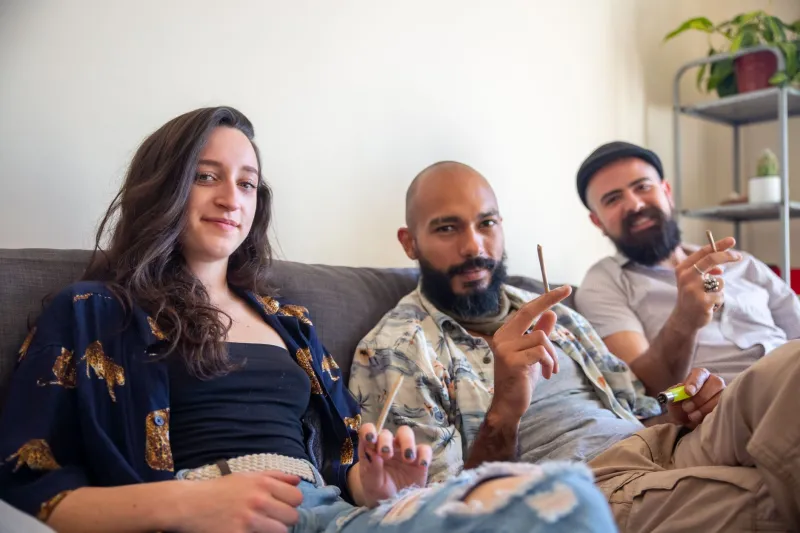
Remember the first time you got high? Maybe it was in someone's basement, maybe it was out back behind a concert venue, maybe it was completely legal and delivered right to your door. Either way, there's a decent chance that experience felt nothing like how cannabis hits you today.
That's not your imagination. Your body, your brain, and your life circumstances are constantly shifting—and cannabis shifts right along with them. Whether you're a college sophomore discovering edibles for the first time or a 60-something retiree cautiously revisiting a plant you last touched in the Carter administration, the science and the lived experience are genuinely fascinating.
Let's break it down by life stage, look at what's actually happening biologically, and figure out what to do about it.
Your Twenties: The "I Can Smoke Anything" Phase
For most people, early adulthood is peak cannabis tolerance territory. Young adults tend to metabolize THC quickly, their livers are efficient, and their bodies bounce back from a heavy session with relative ease. But here's the catch: the brain is still developing well into the mid-twenties, particularly the prefrontal cortex—the part responsible for decision-making, impulse control, and emotional regulation.
This means heavy use in your early twenties isn't consequence-free, even if it feels that way. Research published in journals like Neuropsychopharmacology has flagged links between frequent adolescent and young adult cannabis use and subtle changes in memory and motivation over time. That doesn't mean you're doomed if you partook in your youth, but it does mean the "invincible" feeling is partly biological illusion.
Jake, 24, a barista in Denver, puts it simply: "I smoked every day for two years in college and barely felt anything by the end. I had to take huge dabs just to feel normal. Now I'm taking a break and honestly, a single gummy hits me way harder than it used to."
That tolerance buildup is real, and it compounds fast when you're young and using heavily.
Your Thirties: Life Gets Complicated
Here's where things get interesting. Your thirties often bring a cocktail of career pressure, relationship milestones, maybe kids, definitely less sleep, and a metabolism that's quietly started to slow down. Cannabis doesn't exist in a vacuum—it interacts with all of it.
Many people in their thirties report that the same strain they loved at 25 now triggers anxiety or paranoia. Part of that is psychological context: more responsibilities mean more background stress, and THC can amplify whatever's already simmering. Part of it is also physiological—changes in body fat percentage, hormonal fluctuations, and shifts in liver enzyme activity all influence how cannabinoids are processed.
Marissa, 34, a marketing director in Austin, says her relationship with weed did a full 180 after she turned 30. "In my twenties, I could smoke a blunt and go to a party. Now even a moderate dose of a high-THC flower makes me spiral into overthinking. I switched to CBD-dominant products with just a little THC, and honestly? I feel better than I did when I was 'hardcore' about it."
This is a really common pivot point. The thirties are often when people start prioritizing function over intensity.
The Endocannabinoid System: Your Body's Weed Receptor Network Is Aging Too
Here's the underlying biology that ties all of this together. Your body has a built-in endocannabinoid system (ECS)—a network of receptors (CB1 and CB2 primarily) that THC and CBD interact with. This system regulates mood, appetite, sleep, pain response, and a whole lot more.
As you age, your ECS changes. CB1 receptor density in the brain tends to decrease over time, which sounds counterintuitive but actually means older adults can become more sensitive to THC, not less. There's also the matter of how your body stores and releases THC—because it's fat-soluble, it accumulates in fatty tissue. As body composition shifts with age, so does the way THC is stored and slowly released back into the bloodstream.
This is why your 60-year-old aunt who "tried weed once in the '70s and it was fine" might absolutely lose her mind on a modern 25mg edible. Today's products are dramatically more potent than what was available decades ago, and an aging ECS can amplify that potency in unexpected ways.
Your Fifties and Beyond: The Comeback Crowd
One of the most interesting demographic shifts in legal cannabis? Older adults are coming back—or discovering it for the first time—in huge numbers. A 2020 report from the Journal of the American Medical Association noted sharp increases in cannabis use among adults over 50, driven largely by interest in managing chronic pain, sleep issues, and anxiety without a cabinet full of pharmaceuticals.
But this demographic needs to approach it with real intention. Drug interactions are a serious consideration: cannabis can affect how the liver processes blood thinners, certain heart medications, and antidepressants. Anyone over 50 on prescription medications should absolutely loop in their doctor before experimenting, full stop.
Robert, 67, a retired teacher in Tucson, started using cannabis two years ago for arthritis pain. "My doctor was skeptical but open-minded. I started with a 2.5mg THC edible and honestly that was plenty. I worked up slowly to 5mg. It's changed my quality of life, but I had to treat it like a new medication, not like a recreational thing I could just wing."
That mindset—intentional, slow, and informed—is exactly the right approach for older adults re-entering the cannabis space.
Practical Adjustments for Every Stage
Regardless of where you are in life, a few principles hold:
Start lower than you think you need to. This is true at 22 and even more true at 62. Tolerance isn't permanent, and it's far easier to add than to undo.
Match the format to your lifestyle. Smoking might be perfect when you're young and healthy, but as respiratory concerns emerge with age, vaporizers, tinctures, and edibles become smarter choices. Edibles in particular offer long-lasting relief that's useful for sleep and chronic pain—just respect the delay.
Pay attention to THC-to-CBD ratios. High-THC products are not the only option. CBD modulates the intensity of THC's psychoactive effects, and many older or more sensitive users find a 1:1 or even CBD-dominant product gives them what they need without the edge.
Keep a simple journal. Seriously. Track what you used, how much, when, and how you felt. Cannabis is personal, and your own data is more valuable than any general guideline.
Revisit your consumption habits regularly. What worked at 28 may not work at 38. Life changes, and your cannabis routine should too.
The Bottom Line
Cannabis is not a static experience. It's a relationship—one that evolves as you do. The legal market has made it easier than ever to access a wide variety of products, potencies, and formats that can be dialed in to exactly where you are in life right now.
Whether you're a first-timer, a longtime daily user, or a curious older adult exploring what legal cannabis actually looks like in 2024, the smartest move is the same: stay curious, stay humble about your tolerance, and don't assume yesterday's experience tells you much about today's.
Your body is different. Your weed should be too.