Cash Only and Complicated: The Real Story Behind Cannabis Banking in America

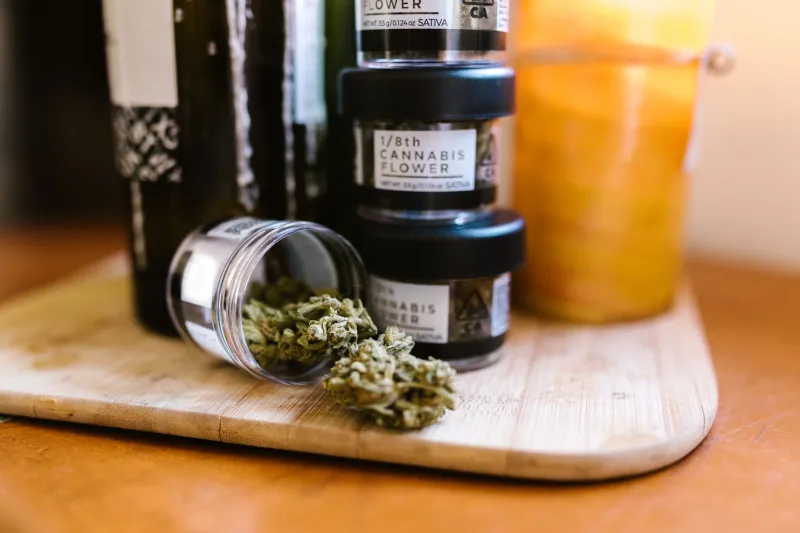
Photo by Photo by NSYS Group on Unsplash on Unsplash
You've done your research, picked your products, and driven to a fully licensed, state-legal dispensary. Then you see it: the ATM in the corner. The handwritten sign: Cash Only. The $3.50 withdrawal fee eating into your budget before you've bought a thing.
It feels absurd. In 2024, you can buy a car online and have it delivered to your house. But scoring a legal eighth of flower still requires a trip to an ATM in a strip mall parking lot. This isn't an accident — it's the predictable outcome of a very specific federal-state policy collision that's been grinding on for years. And if you're a regular dispensary customer, understanding it isn't just interesting — it's genuinely useful for protecting your money.
Why Banks Won't Touch Cannabis Businesses
Here's the core problem in plain English: cannabis remains a Schedule I controlled substance under federal law. Banks are federally regulated institutions. When a bank opens an account for a cannabis business, accepts a cannabis company's deposits, or processes a cannabis transaction, it risks violating the Bank Secrecy Act and federal anti-money-laundering statutes — even if every single thing that business does is perfectly legal under state law.
The penalties for banks that run afoul of federal financial crime law are severe: fines, loss of their federal charter, and potential criminal liability for executives. Most banks look at that risk calculus and decide it's simply not worth it. The ones that do work with cannabis businesses — and there are a growing number of credit unions and community banks that do — typically charge enormous compliance fees to offset the risk and paperwork burden.
The result is an industry that generated an estimated $33 billion in legal sales in 2023 operating largely outside the conventional financial system. That means mountains of physical cash flowing through dispensaries every single day.
What This Means for You at the Counter
The banking gap isn't just an abstract business problem. It has real, tangible effects on consumers:
ATM fees add up. Many dispensaries have on-site ATMs — often operated by third-party vendors — that charge fees between $3 and $5 per transaction. If you're making frequent purchases, that's a meaningful hidden cost.
Cashback workarounds exist but aren't always transparent. Some dispensaries use point-of-sale systems that allow "cashless ATM" transactions — essentially a debit card swipe that's processed as a cash withdrawal and rounded up to the nearest dollar. It functions like a card payment but technically isn't one. These systems operate in a legal gray zone and have drawn regulatory scrutiny in several states.
Carrying cash creates safety risks. This one is serious. Dispensaries are known cash-heavy businesses, which makes both the stores and their customers potential targets. Robberies targeting cannabis consumers leaving dispensaries have been documented in multiple states. If you're withdrawing a significant amount for a large purchase, be aware of your surroundings.
Refunds and disputes are harder. Without a card transaction on record, disputing a charge or getting a refund requires more legwork. Keep your receipts — always.
How Dispensaries Are Managing the Risk
Licensed dispensaries aren't just stuffing cash into a mattress. They operate under strict state-mandated cash-handling protocols designed to keep both the money and the employees safe.
Most established dispensaries use armored car services for cash transport, maintain detailed transaction logs that satisfy state regulators, and work with specialized cannabis-friendly accountants who understand the unique tax situation these businesses face — including the brutal Section 280E of the federal tax code, which prevents cannabis businesses from deducting most ordinary business expenses.
Some larger multi-state operators (MSOs) have managed to secure relationships with smaller financial institutions willing to take on the compliance burden for a premium. But for many independent dispensaries, especially in newer legal markets, banking remains a patchwork of workarounds.
The Legislative Landscape: SAFE Banking and Its Stalled Progress
Congress has been trying to fix this for years. The SAFE Banking Act — which would protect banks from federal penalties for working with state-legal cannabis businesses — has passed the House of Representatives multiple times, only to stall repeatedly in the Senate. As of this writing, it remains unresolved, caught in the broader political gridlock around federal cannabis reform.
The cannabis industry considers SAFE Banking a top legislative priority, and advocacy groups like the National Cannabis Industry Association (NCIA) have made it a central lobbying focus. Several states have also explored state-level solutions, including state-chartered banks or cannabis-specific financial institutions, with mixed results.
Until something changes at the federal level, the cash problem isn't going away.
Fintech Is Trying to Fill the Gap
Where Congress has stalled, a wave of cannabis-specific financial technology companies has stepped in — with varying degrees of success and legitimacy.
Companies like Hypur, PaySign, and CanPay have built payment platforms specifically designed for cannabis transactions, often routing payments through ACH bank transfers or proprietary networks that sidestep traditional card networks like Visa and Mastercard (both of which prohibit cannabis transactions on their networks).
Some dispensaries now accept payments through these apps, which can feel like a normal digital transaction from the consumer side. The tradeoff: these platforms require you to link a bank account, and they operate under their own terms of service that are worth reading before you use them.
Cryptocurrency has also been floated as a solution, and a handful of dispensaries have experimented with it — but volatility, consumer adoption barriers, and regulatory uncertainty have kept crypto from becoming a mainstream answer.
Practical Tips for Protecting Yourself
Until the banking situation gets resolved federally, here's how to navigate it as a consumer:
- Withdraw cash before you go. Use your own bank's ATM to avoid the dispensary's markup fees. Many dispensaries post their average transaction amounts on their website or social media — it's worth checking so you show up with roughly the right amount.
- Ask about payment options upfront. Some dispensaries have digital payment options through cannabis fintech apps. It's always worth asking at the counter before you head to the ATM.
- Don't flash cash in the parking lot. This sounds obvious but it bears saying. Put your purchase in a bag, your cash in your pocket or wallet, and get to your car efficiently.
- Keep your receipts. For returns, disputes, and your own records, paper receipts are your only documentation in a cash transaction.
- Be skeptical of sketchy workarounds. If a payment method feels confusing or a cashier can't clearly explain how it works, that's a red flag. Stick to cash or a well-known cannabis payment app.
The Bigger Picture
The cannabis banking crisis is ultimately a story about what happens when state and federal law are fundamentally out of sync. Consumers, employees, and business owners all absorb the friction costs of that misalignment — in ATM fees, safety risks, and sheer inconvenience.
The industry is resilient and creative, and fintech solutions are getting better. But the real fix requires Congress to act. In the meantime, knowing how the system works — and where its pressure points are — puts you in a much better position every time you walk through a dispensary door.