The Number on the Package Is Lying to You: A Real Guide to Edible Dosing
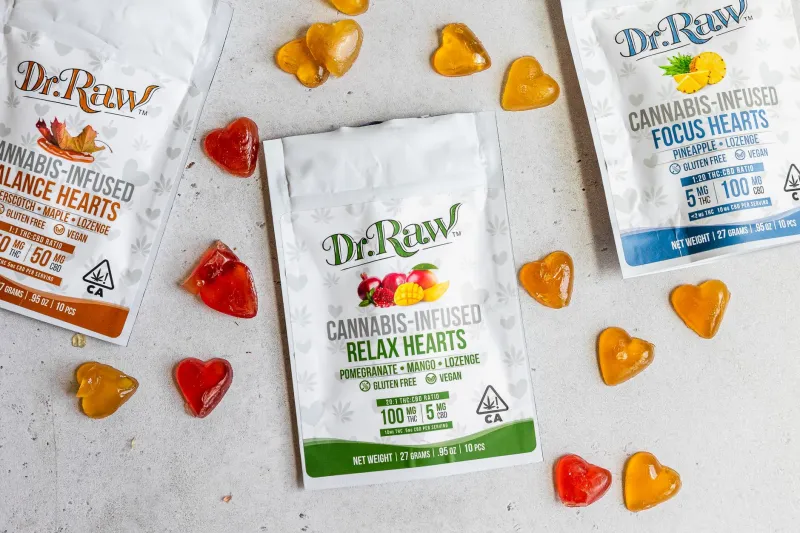
Let's say you ate a 10mg THC gummy. Standard dose, right? The kind they sell everywhere, the kind budtenders recommend for beginners. You waited an hour, felt almost nothing, and ate another one. Then, about ninety minutes after that second gummy, you were on your couch convinced the ceiling was breathing.
That experience — or something close to it — is practically a rite of passage for edible consumers. And it's not your fault. It's the result of a fundamental mismatch between what cannabis packaging tells you and how your body actually processes THC when you eat it. The number on the label is a starting point, not a guarantee. Here's why.
Bioavailability: The Science of How Little You're Actually Getting
When you smoke or vape cannabis, THC enters your bloodstream through your lungs almost immediately. The bioavailability — the percentage of THC that actually reaches your brain — is roughly 30 to 56 percent, depending on inhalation technique and the product. It's imperfect, but it's fast and relatively predictable.
Eating THC is a completely different physiological event. Your digestive system is not optimized for drug delivery. When you consume an edible, THC has to survive stomach acid, get absorbed through the intestinal wall, pass through liver metabolism — a process called first-pass metabolism — and then enter circulation. By the time it reaches your brain, you're working with somewhere between 4 and 20 percent of the original dose, depending on a stack of individual variables.
That 10mg gummy might be delivering 1mg of active THC to your brain. Or it might be delivering 2mg. The variance is real, and it's significant.
The other thing that happens in the liver is conversion. Delta-9 THC — the primary compound in most cannabis — gets metabolized into 11-hydroxy-THC, which crosses the blood-brain barrier more efficiently and produces effects that are often described as more intense and longer-lasting than inhaled THC. This is part of why edibles hit differently, not just slower. You're not just consuming a delayed version of the same experience. You're consuming a chemically distinct one.
Why Your Body Is Not Your Friend's Body
Bioavailability is just the beginning. Individual metabolism adds another enormous layer of variability.
Your liver enzyme activity, specifically the CYP2C9 and CYP3A4 enzymes responsible for metabolizing THC, varies significantly from person to person based on genetics. Some people are fast metabolizers — they process THC quickly, feel effects sooner, and come down faster. Some are slow metabolizers — effects take longer to arrive, peak higher, and last much longer.
Body composition matters too, though not in the way most people assume. THC is fat-soluble, which means it can be stored in fatty tissue. People with higher body fat percentages don't necessarily feel edibles less — but the storage dynamic can affect how long effects linger and how THC redistributes over time.
What you've eaten that day has a substantial impact as well. A full stomach slows absorption and can blunt peak effects. An empty stomach accelerates them. Taking an edible after a high-fat meal can actually increase absorption because dietary fats facilitate THC uptake in the gut.
Tolerance, obviously, plays a role. But even among regular consumers, edible tolerance doesn't track perfectly with inhalation tolerance. Someone who smokes daily and considers themselves highly tolerant may find that a 20mg edible still floors them, because the metabolic pathway is different.
The Homemade Versus Commercial Gap
Commercial edibles from licensed dispensaries are required in most states to undergo lab testing for potency, and the dosing on the label reflects actual measured THC content — give or take the state's allowable variance, which is typically plus or minus 15 to 20 percent. That's already a meaningful range, but it's at least grounded in chemistry.
Homemade edibles are a different story. Infusing cannabis into butter or oil at home produces wildly inconsistent results depending on decarboxylation temperature, infusion time, fat content, and how evenly the THC distributes throughout the finished product. A batch of brownies might have double the intended dose in one corner and half in another. This isn't a reason to avoid home cooking — it's just a reason to approach homemade edibles with genuine humility and a willingness to experiment slowly.
Why Dispensary Staff Often Can't Help You Here
Budtenders are frequently put in an awkward position when it comes to dosing advice. Most states prohibit dispensary staff from making specific medical claims or giving personalized dosing guidance in a clinical sense. Beyond the legal constraint, individual variation is so significant that any specific recommendation is more of an educated guess than a prescription.
When a budtender says "start with 5mg and see how you feel," that's genuinely good advice — but it's also the safest possible thing they can say. It protects the store, it's unlikely to cause harm, and it's technically correct. What it doesn't do is account for your specific metabolism, your tolerance history, your body composition, or what you ate for lunch.
The industry also has a commercial incentive to keep dosing conversations simple. Complicated dosing conversations take time, can make products sound intimidating, and might reduce sales. A 10mg standard dose is a clean, marketable concept. "Your effective dose might be anywhere from 2mg to 25mg depending on factors we can't predict" is not.
A Real Framework for Finding Your Dose
The good news is that figuring out your actual effective dose is achievable. It just requires patience and some methodical thinking.
Start low and wait long. The standard advice exists for a reason. Begin with 2.5 to 5mg from a commercially tested product. Wait a full two hours before concluding anything about whether it worked.
Keep a simple log. Note the product, the dose, what you ate beforehand, and what you felt and when. After three or four sessions with the same product, patterns will emerge.
Hold the dose constant, change one variable at a time. If you want to understand how food intake affects you, try the same dose fasted versus fed on different days. Don't change the dose and the conditions simultaneously.
Don't chase the onset. The most common dosing mistake is redosing because you don't feel anything yet. Edibles are slow. Two hours is not an exaggeration. Three hours is sometimes the reality.
Accept that your dose might be weird. Some people genuinely find 2.5mg sufficient. Others need 40mg to feel anything notable. Neither is wrong. There's no shame in being a low-dose person, and there's no prize for tolerating more than you need.
The number on the package is a starting point, not a truth. Your body will give you the actual answer — you just have to be willing to listen slowly.